- Product Spotlight, Supplier Products
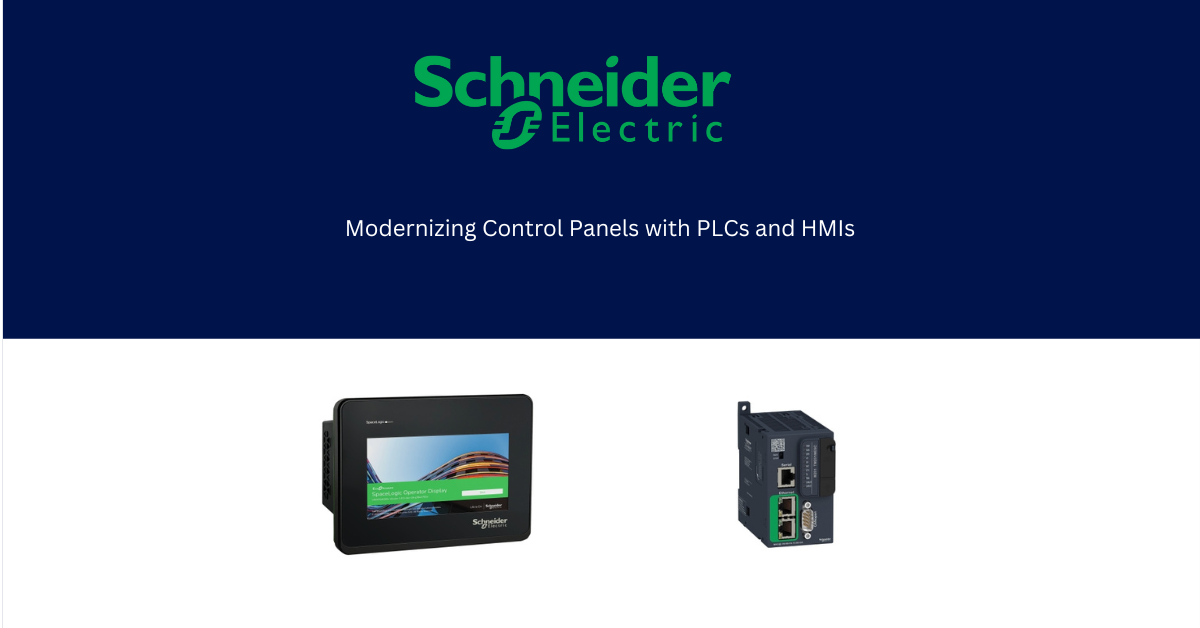
Modernizing Control Panels with Schneider Electric PLCs and HMIs
- By Emily Hagel
Control panels are the nerve center of any automated system. They coordinate equipment, process data, and give operators visibility into what’s happening on the floor. However, many facilities are still operating panels built around aging hardware, limited diagnostics, and interfaces that are challenging to support.
Modernizing control panels with Schneider Electric PLCs and HMIs helps bridge that gap, bringing improved performance, enhanced visibility, and long-term supportability to industrial automation systems.
Why Panel Modernization Matters
Legacy control panels were often designed around the needs and technology available at the time—standalone controllers, limited communication capabilities, and push-button or basic display interfaces that provide minimal visibility into system performance. While these systems may still operate, they can limit operational insight and flexibility as demands on equipment increase.
As control components age, the challenges become more pronounced. Replacement parts grow harder to source, vendor support may be reduced or discontinued, and even minor failures can result in extended downtime. Troubleshooting often requires more time and specialized knowledge, increasing maintenance costs and putting additional strain on engineering and operations teams.
Upgrading to modern Schneider Electric PLC and HMI platforms allows facilities to move toward standardized, connected control architectures. Modern systems simplify maintenance through consistent hardware and software environments, improve system visibility, and support easier diagnostics. Just as importantly, they create a flexible foundation that can accommodate future expansion, system integration, and evolving operational requirements, helping facilities extend the useful life of their control infrastructure while reducing long-term risk.
Smarter Control with Schneider Electric PLCs
Schneider Electric offers PLC platforms designed to support a wide range of automation needs, from simple machine control to complex, multi-process systems.
For smaller or modular applications, Modicon M221 and M241 PLCs are commonly used in packaging, material handling, and OEM machinery. These controllers provide compact design, flexible I/O, and straightforward programming for systems that need reliable control without unnecessary complexity.
In larger or more demanding applications, Modicon M340 and M580 PLCs are often selected. These platforms support higher processing power, expanded communications, and advanced diagnostics, making them well-suited for manufacturing lines, infrastructure systems, and process control environments.
Modern Schneider Electric PLCs also improve visibility into system health, allowing maintenance teams to identify faults faster and reduce unplanned downtime.
Improved Visibility Through Schneider Electric HMIs
An HMI is often the primary point of interaction between operators and the control system, making it a critical component of any control panel. Older displays can limit system visibility, rely on outdated graphics, or present information in ways that slow response times and increase the risk of operator error—especially during alarms or abnormal conditions. When operators struggle to quickly interpret system status, even minor issues can escalate into downtime.
Schneider Electric Harmony HMIs, including the Harmony ST and Harmony GTU series, are designed to address these challenges through clear visualization and intuitive operation. These HMIs provide real-time system feedback, alarm management, and historical trend data in a modern interface that’s easy to navigate. Information is organized logically, allowing operators to quickly understand system conditions and respond with confidence.
When paired with Schneider PLCs, Harmony HMIs create a cohesive control and visualization platform. This tight integration improves operational awareness, reduces training time for new operators, and supports more consistent system operation across shifts and teams, ultimately improving both efficiency and reliability.
Seamless Integration Across Automation Systems
One of the key advantages of Schneider Electric PLC and HMI solutions is how easily they integrate with other automation components within a control panel. Drives, soft starters, power meters, safety devices, and monitoring equipment can communicate within a single, unified ecosystem, reducing the need for custom interfaces or workarounds.
Using software platforms such as EcoStruxure Control Expert and EcoStruxure Machine Expert, engineers can streamline programming, standardize panel designs, and reduce commissioning time. These platforms support reusable code, consistent tag structures, and centralized project management, making long-term maintenance and future upgrades significantly easier.
Open communication protocols further enhance flexibility, allowing modern Schneider control systems to integrate with existing equipment and connect to higher-level plant or facility networks. This interoperability helps facilities modernize at their own pace, without requiring a full system overhaul, while still laying the groundwork for future expansion and digital initiatives.
Using platforms like EcoStruxure™ Control Expert and Machine Expert, engineers can streamline programming, reduce commissioning time, and maintain consistent standards across panels. Open communication protocols also make it easier to connect to existing equipment or higher-level plant networks.
Designed for Long-Term Support
Modern control panel upgrades aren’t just about improving performance today; they’re about ensuring long-term reliability, serviceability, and support over the life of the system. As control technology continues to evolve, older PLCs and HMIs can become difficult to maintain, harder to integrate with newer equipment, and increasingly vulnerable to obsolescence.
Schneider Electric continues to invest heavily in product development, software platforms, and lifecycle management to help facilities reduce those risks. Ongoing updates to control hardware, programming environments, and visualization platforms ensure that modern systems remain supported, secure, and adaptable as operational needs change. This long-term approach gives engineers and maintenance teams confidence that the technology they install today will still be viable years down the road.
By modernizing control panels with current Schneider Electric PLC and HMI platforms, facilities gain more than updated hardware. They simplify maintenance with standardized components, improve system visibility through modern interfaces, and create a foundation that supports future expansion and integration. Whether the goal is incremental upgrades or a broader digital transformation strategy, modern control platforms help extend system life while reducing the complexity and cost of ongoing support.
Local Expertise Makes the Difference
Control panel modernization is rarely one-size-fits-all. System requirements, environments, and operational goals all influence the right solution.
Lakeland Engineering supports Schneider Electric PLC and HMI solutions through our Minneapolis and Kansas locations, helping customers evaluate existing panels, select the right hardware, and design upgrades that align with real-world application needs. Local support helps ensure systems are built correctly and supported long after startup.
Building Smarter Panels for the Future
Modern automation demands visibility, flexibility, and reliability. Upgrading control panels with Schneider Electric PLCs and HMIs provides the tools needed to meet those demands while simplifying operation and maintenance.
Whether modernizing a single panel or standardizing systems across a facility, Schneider Electric control solutions help build smarter, more resilient automation systems for the future.
Shop Schneider Electric