
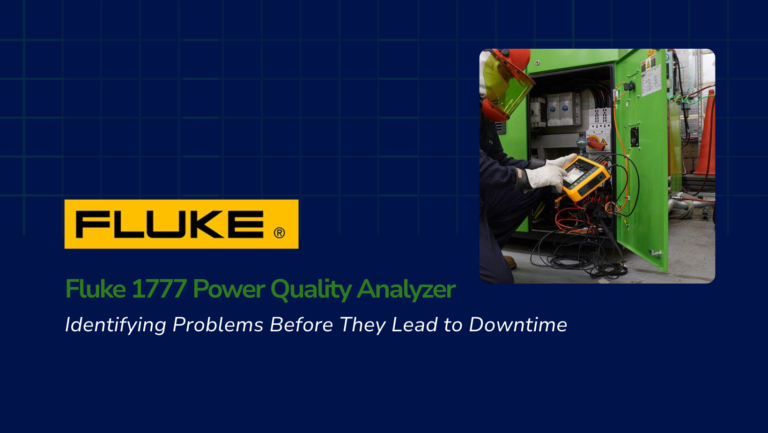
Electrical power problems aren’t always easy to identify. Voltage fluctuations, harmonics, transients, and other power disturbances can cause unexpected equipment shutdowns, damage sensitive electronics, and reduce the reliability of industrial electrical systems.
The challenge is that many of these issues are intermittent. A voltage disturbance may last only a fraction of a second, making it difficult to identify the source using standard electrical testing equipment.
The Fluke 1777 Power Quality Analyzer helps electrical professionals capture, measure, and analyze these events. Available through Lakeland Engineering’s electrical test equipment rental fleet, the Fluke 1777 provides an advanced solution for contractors, facility managers, and maintenance teams investigating power quality issues without having to purchase specialized equipment.
What Is the Fluke 1777 Power Quality Analyzer?
The Fluke 1777 is a three-phase power quality analyzer designed to monitor electrical systems, identify disturbances, and help determine the cause of power-related problems.
It measures and records a wide range of electrical parameters, including:
- Voltage and current
Frequency
Active, apparent, and reactive power
Power factor
Voltage dips and swells
Harmonics and interharmonics
Voltage and current unbalance
Inrush current
High-speed voltage transients
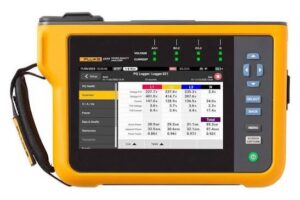
One of the biggest advantages of the Fluke 1777 is its ability to capture high-speed electrical events that may otherwise go unnoticed. It can capture voltage transients up to 8 kV with sampling rates up to 20 MHz, making it particularly useful when investigating sensitive electronic equipment failures.
The analyzer also features automated measurements, a touchscreen interface, and guided setup to help simplify power quality studies and troubleshooting.
What Problems Can a Power Quality Analyzer Identify?
Power quality issues can affect nearly every part of an electrical system. The Fluke 1777 helps technicians investigate several common problems.
Voltage Dips and Swells
Voltage dips occur when voltage temporarily drops below its normal level, while swells occur when voltage temporarily increases. These disturbances can cause motors, drives, PLCs, and other sensitive equipment to malfunction or shut down.
Harmonic Distortion
Harmonics are distortions in the electrical waveform caused by non-linear loads such as variable frequency drives, switching power supplies, and other electronic equipment. Excessive harmonics can contribute to overheating, equipment malfunctions, increased electrical losses, and reduced system efficiency.
Electrical Transients
Transients are sudden, short-duration changes in voltage that can damage sensitive electronics and electrical components. They may result from switching operations, lightning-related disturbances, or other events within an electrical system.
The Fluke 1777 offers high-speed transient capture up to 20 MHz, helping technicians investigate disturbances that occur too quickly for conventional monitoring equipment to record in detail.
Power Factor and Load Imbalance
Poor power factor and phase imbalance can contribute to increased current, unnecessary electrical losses, and reduced system capacity. Monitoring these parameters helps identify opportunities to improve electrical system performance.
What Problems Can a Power Quality Analyzer Identify?
A power quality analyzer is particularly useful when electrical problems are difficult to reproduce or occur intermittently.
Common applications include:
Troubleshooting unexpected equipment shutdowns: Investigate why motors, VFDs, PLCs, or other industrial equipment are unexpectedly tripping or resetting.
Investigating sensitive electronic equipment failures: Capture voltage transients and other disturbances that may contribute to damaged electronics.
Conducting power quality studies: Monitor electrical systems over time to identify voltage fluctuations, harmonics, and other irregularities.
Performing energy and load studies: Evaluate electrical demand, power consumption, power factor, and system loading.
Commissioning new electrical equipment: Establish baseline measurements and evaluate power quality following equipment installations or system upgrades.
Investigating recurring breaker trips: Record electrical conditions and events to help determine whether power quality or loading issues are contributing to nuisance trips.
Evaluating industrial facilities: Identify electrical disturbances that may affect production equipment, automation systems, and sensitive processes.
Rather than relying on assumptions or replacing components without identifying the underlying issue, technicians can use recorded electrical data to make more informed troubleshooting decisions.
Electrical Standards and Power Quality Requirements
Power quality measurements are important when evaluating electrical system performance, investigating equipment problems, and verifying compliance with applicable standards.
Several standards are relevant when performing power quality studies:
IEC 61000-4-30 – Power Quality Measurement Methods
This international standard establishes measurement methods for power quality parameters, including voltage magnitude, dips, swells, interruptions, frequency, and harmonics. The Fluke 1777 meets IEC 61000-4-30 Class A requirements, providing a standardized approach to power quality measurement.
IEEE 519 – Harmonic Control in Electric Power Systems
IEEE 519 establishes recommended harmonic voltage and current distortion limits at the point of common coupling (PCC). It is commonly referenced when evaluating harmonic distortion in industrial and commercial electrical systems.
EN 50160 – Voltage Characteristics of Electricity Supplied by Public Distribution Networks
EN 50160 defines characteristics of voltage supplied by public electricity distribution networks under normal operating conditions. The Fluke 1777 can evaluate recorded power quality data against this standard.
Why Does This Matter?
These standards provide established measurement methods and reference criteria for evaluating electrical system performance. Using a Class A power quality analyzer can help engineers and technicians collect consistent, reliable data when conducting investigations or documenting power quality conditions.
Specific compliance requirements depend on the application, facility, and applicable standards. The analyzer provides measurement data; interpreting results and determining compliance still requires appropriate technical expertise.
Rent the Fluke 1777 from Lakeland Engineering
Advanced power quality analyzers are valuable tools, but they aren’t necessarily needed every day.
For many electrical contractors, maintenance departments, and facility managers, the Fluke 1777 may only be required for a specific investigation, scheduled power quality study, commissioning project, or troubleshooting situation.
Lakeland Engineering offers the Fluke 1777 Power Quality Analyzer as part of its electrical test equipment rental fleet. Whether you’re investigating unexpected equipment shutdowns, performing a power quality study, or evaluating electrical system performance, the Fluke 1777 provides the measurement capabilities needed to better understand what’s happening within your electrical system.
Need a Fluke 1777 for an upcoming project? Rent the Fluke 1777 Power Quality Analyzer from Lakeland Engineering or contact our team for help finding the right test equipment for your application.