
- Educational, Product Spotlight
DENT Instruments SPBL-Series Revenue-Grade Split-Core Current Transformers
- By Emily Hagel
Accurate energy measurement is essential for managing electricity costs, allocating utility expenses, and monitoring building performance. Whether a facility is tracking energy consumption across multiple tenants or evaluating the results of an energy conservation project, reliable data is critical to making informed decisions.
Current transformers (CTs) play an important role in this process by measuring electrical current and providing a scaled signal to an energy meter. The accuracy of these measurements directly affects the reliability of the overall metering system.
To help meet the needs of applications requiring precise measurements and flexible installation, DENT Instruments has introduced its new SPBL-Series Revenue-Grade Split-Core Current Transformers, combining high-accuracy performance with the convenience of split-core installation.
What Are Split-Core Current Transformers?
Current transformers allow energy meters to measure electrical current in a circuit by converting the current flowing through a conductor into a smaller, proportional signal.
Traditional solid-core CTs typically require the conductor to be disconnected to install the transformer. While effective, this process can add installation time and may require equipment shutdowns or service interruptions.
Split-core CTs address this challenge with a hinged or separable core that opens around an existing conductor. This design allows technicians to install the CT without disconnecting the wiring, helping reduce installation complexity, labor, and downtime.
For commercial buildings and industrial facilities where uninterrupted operation is important, split-core technology offers a practical installation advantage.
Introducing the DENT SPBL Series
The new DENT SPBL Series combines the flexibility of split-core construction with revenue-grade measurement performance. Available in current ratings from 100A to 1200A, these CTs are designed for energy monitoring applications where measurement accuracy and dependable data are important.
When paired with compatible DENT PowerScout meters, the SPBL Series offers the accuracy needed for applications such as tenant billing, energy cost allocation, and demand monitoring.
Key Features of the SPBL Series
Revenue-Grade Accuracy
When used with DENT PowerScout meters, the SPBL Series provides:
IEEE C57.13 Class 0.3 accuracy classification
Typical accuracy of ±0.3%
Typical phase error of less than 0.2°
These specifications support applications where accurate energy data is important for billing, reporting, and performance analysis.
Wide Current Range
With models ranging from 100A to 1200A, the SPBL Series supports a variety of commercial and industrial electrical monitoring applications.
333 mV Output
The SPBL Series uses a 333 mV output, making it compatible with modern energy metering systems designed for this signal type. This low-voltage output also supports safer metering system design when installed according to the manufacturer’s instructions.
Flexible, Efficient Installation
The split-core design allows the CT to be installed around existing conductors without disconnecting wiring. This can simplify retrofits and installations in occupied buildings or operating facilities where downtime is a concern.
UL Listed
The SPBL Series is UL Listed to UL 2808, providing an additional level of product qualification for its intended applications.
Where Can the SPBL Series Be Used?
The combination of measurement accuracy and installation flexibility makes the SPBL Series suitable for several energy monitoring applications.
Tenant submetering: Measure electricity consumption for individual tenants or building spaces.
Utility cost allocation: Support the allocation of energy expenses across departments, tenants, or separate areas of a facility.
Energy and demand metering: Monitor electrical consumption and demand to better understand usage patterns.
Load surveys: Collect current measurements to evaluate electrical loads and support capacity planning.
Building performance monitoring: Track energy use and evaluate building system performance over time.
Energy management projects: Establish energy usage baselines and help assess the results of conservation initiatives.
For facilities with multiple tenants or electrical systems, accurate submetering can provide greater visibility into energy consumption and help support more informed cost-allocation decisions.
Pairing SPBL Current Transformers with DENT PowerScout Meters
A reliable energy monitoring system depends on more than the meter alone. The CTs supplying current measurements are an important part of the overall system.
The DENT SPBL Series is designed to work with DENT energy monitoring solutions, including compatible PowerScout meters. Together, these components can provide a measurement solution for applications ranging from tenant submetering to building-wide energy management.
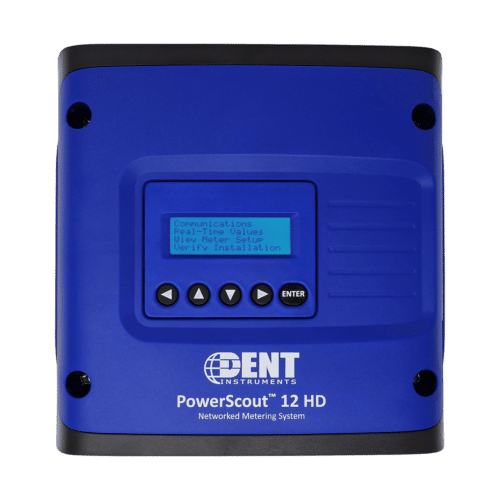
When selecting a CT, it is important to verify the required current rating, output type, accuracy requirements, conductor dimensions, and compatibility with the selected meter. Proper installation and configuration are also essential to achieving reliable measurements.
Choosing the Right Current Transformer for Your Application
For facilities looking to improve energy visibility without adding unnecessary installation complexity, the DENT SPBL Series offers a combination of revenue-grade performance and split-core convenience.
With current ratings from 100A to 1200A, a 333 mV output, and high-accuracy specifications when paired with compatible DENT PowerScout meters, the SPBL Series is designed to support a wide range of commercial and industrial energy monitoring needs.
Lakeland Engineering Equipment Company provides power monitoring solutions to help customers measure, understand, and manage electrical energy use. Contact our team to discuss your application and determine which DENT metering and current transformer solutions may be right for your project.