- Product Spotlight, Supplier Products
Key Features When Designing a Custom Electrical Enclosure
- By Emily Hagel
Industrial electrical enclosures do far more than simply house components. The right enclosure design can improve equipment reliability, simplify maintenance, extend system lifespan, and protect valuable electrical assets from harsh operating conditions. When properly engineered, custom enclosures help facilities reduce downtime, improve safety, and create a more efficient working environment.

At Delta Fabricating, custom enclosure solutions are built around the specific environmental, operational, and maintenance needs of each application. From material selection to internal layout optimization, every design detail plays an important role in overall enclosure performance.
When designing a custom electrical enclosure, here are the key features that matter most.
Selecting the Right NEMA Rating
Delta Fabricating specializes in custom electrical enclosures built to match the exact requirements of industrial facilities. From harsh outdoor environments to sanitary washdown areas, Delta Fabricating designs enclosure solutions engineered for long-term performance, protection, and reliability.
One of the most important parts of enclosure design is determining the level of environmental protection required. However, different facilities face different challenges, including dust, moisture, chemicals, oil, and outdoor weather exposure and it’s important to know which ones you face.
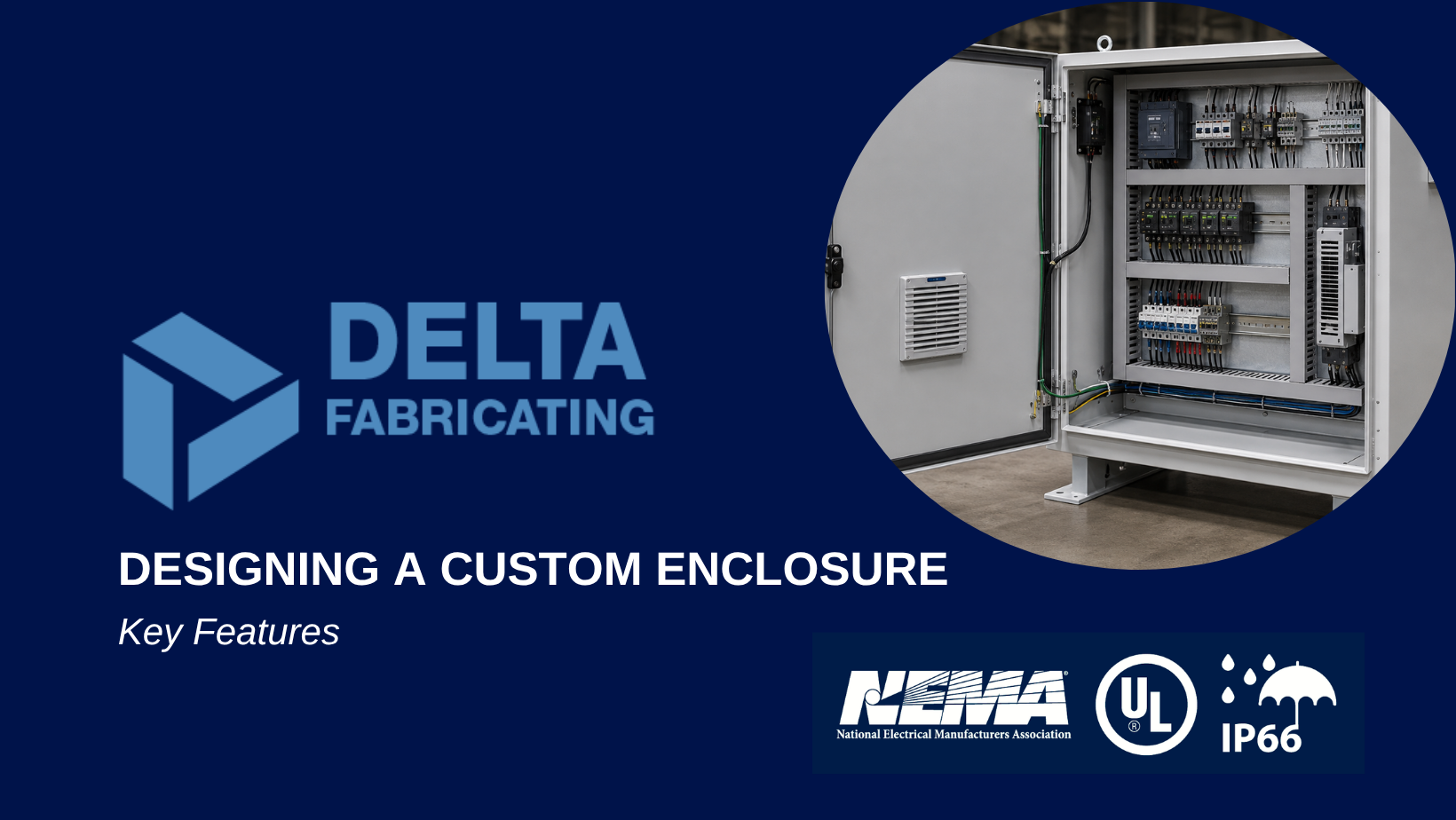
We work with customers to design enclosures that meet the proper NEMA and IP66 ratings for their environment and application.
Common ratings include:
NEMA 1
Designed for general indoor applications where basic protection from dirt and accidental contact is needed.
NEMA 3R
Ideal for outdoor installations requiring protection from rain, sleet, and ice formation.
NEMA 4
Provides protection against water intrusion and washdowns often found in industrial manufacturing environments.
NEMA 4X
Offers the same water protection as NEMA 4 while adding corrosion resistance, making it a preferred choice for food processing, wastewater, and chemical applications.
NEMA 12
Protects against dust, dirt, and non-corrosive liquids commonly found in industrial facilities.
IP66
Dust-tight and protected against powerful water jets and heavy washdowns.
Material Selection for the Environment
The enclosure material has a direct impact on durability, corrosion resistance, and overall service life. Delta Fabricating works with mild steel, stainless steel, galvanized steel, and aluminum to provide custom enclosure solutions tailored to specific industrial environments and application requirements.
By matching the enclosure material to the environment, Delta Fabricating helps customers maximize equipment protection, improve longevity, and reduce maintenance concerns over time.
Mild Steel
Mild steel enclosures offer strength and cost-effectiveness for general industrial indoor applications where corrosion resistance is less critical. It provides excellent structural integrity and is widely used for control panels and general-purpose enclosures.
Stainless Steel
Stainless steel is ideal for corrosive, sanitary, or washdown environments commonly found in food processing, pharmaceutical manufacturing, wastewater treatment, and outdoor applications. Stainless steel offers superior resistance to moisture, chemicals, and harsh cleaning agents.
Galvanized Steel
Galvanized steel provides enhanced corrosion protection through its zinc-coated finish, making it a strong option for environments exposed to moisture or demanding industrial conditions. It is often selected for outdoor or humid environments where added durability is required.
Aluminum
Aluminum enclosures provide a lightweight yet durable solution with strong corrosion resistance and easier installation for select indoor and outdoor applications. They are commonly used in outdoor, transportation, and applications where weight reduction is important.
Cooling and Ventilation
Custom enclosure designs can incorporate several cooling and ventilation solutions, including:
- Filtered fan systems
- Louvers and ventilation panels
- Air conditioners
- Heat exchangers
- Passive ventilation designs
- Forced-air cooling systems
Cable Management
Well-designed enclosures may include:
- Cable trays and routing channels
- Wire duct systems
- Dedicated entry points
- Gland plates
- Strain relief systems
- Segregated power and control wiring paths
Mounting Plates
Benefits of properly designed mounting systems include:
- Easier equipment installation
- Improved airflow around components
- Faster troubleshooting and maintenance
- Simplified future expansions
- Reduced installation labor
Doors and Windows
Common enclosure access features include:
- Single-door or multi-door configurations
- Hinged access panels
- Locking handles and latching systems
- Removable side panels
- Split-door designs
Custom Enclosure Design Creates Long-Term Value
Overall, every industrial application has unique environmental and operational requirements. Custom enclosure solutions allow manufacturers and facilities to improve equipment protection, simplify maintenance, and optimize system performance for the long term.
By combining the right material selection, NEMA protection level, cooling strategy, cable management system, and internal layout design, facilities can create enclosures that support reliability, efficiency, and safety across a wide range of industrial applications.
Whether the application involves indoor automation systems, outdoor utility equipment, food processing operations, or corrosive industrial environments, a properly engineered custom enclosure helps protect critical systems while reducing maintenance challenges over time.
Related Posts