- Supplier Products
Why Fieldbus Protocol Choice Can Make or Break Your Network
- By Skylee Schwingler-lee
If you have ever tried to connect a legacy drive to a modern PLC and had them refuse to talk to each other, you already understand why fieldbus protocols matter. Different manufacturers, different generations of equipment, and different automation standards all speak different languages. Here is a plain-language breakdown of the most common industrial fieldbus protocols and how HMS Networks Anybus products help bridge the gaps.
What Is a Fieldbus Protocol?
A fieldbus is a communication network that connects industrial devices like drives, sensors, PLCs, and I/O modules. Instead of running individual wires from every device back to a control panel, a fieldbus lets devices share a single network connection and exchange data in real time.
The problem is that there is no single universal standard. Different industries, regions, and manufacturers adopted different protocols over the decades. As a result, most industrial facilities are running a mix.
The Most Common Protocols
PROFIBUS DP: One of the most widely used fieldbus standards in the world, particularly in European-built equipment and process industries. PROFIBUS DP is a proven, reliable protocol with a large installed base of drives, motors, and process instruments. However, it is an older serial standard and does not natively connect to modern Ethernet-based systems without a gateway.
EtherNet/IP: The dominant industrial Ethernet standard in North America, backed by Rockwell Automation and widely adopted across Allen-Bradley systems. EtherNet/IP runs over standard Ethernet hardware but uses a specific industrial protocol layer on top. If your facility runs Allen-Bradley PLCs, EtherNet/IP is likely your primary network.
PROFINET Siemens’ industrial Ethernet standard and the European counterpart to EtherNet/IP. PROFINET is common in Siemens-heavy environments and European manufacturing. Like EtherNet/IP, it runs over standard Ethernet infrastructure but requires compatible devices or gateways to communicate with other protocols.
Modbus RTU and Modbus TCP: Modbus is one of the oldest and most universal industrial protocols still in active use. Modbus RTU runs over serial connections, and Modbus TCP runs over Ethernet. It is simple, widely supported, and found in a huge range of devices, including meters, sensors, drives, and controllers. Many legacy devices only support Modbus, making gateway translation essential when integrating them into modern networks.
EtherCAT: A high-speed industrial Ethernet protocol developed by Beckhoff and common in motion control and robotics applications. EtherCAT prioritizes speed and precision, making it the right choice for applications that require tight synchronization between multiple axes of motion.
Where HMS Networks Anybus Comes In
The challenge in most facilities is not any single protocol. It is the mix. A PROFIBUS drive needs to talk to an EtherNet/IP PLC. A Modbus meter needs to feed data into a PROFINET network. A machine from one integrator runs EtherCAT while the rest of the plant runs something else entirely.
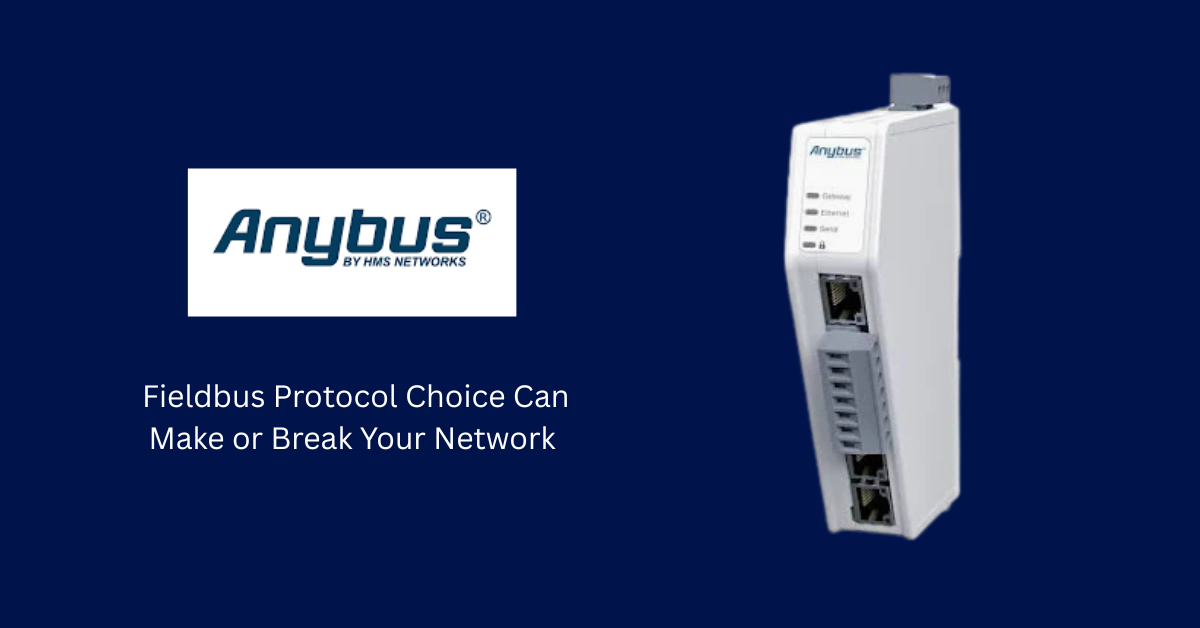
HMS Networks Anybus gateways solve this without requiring a replacement control system. Their key product families include:
Anybus Communicator Standalone gateways that translate between serial and fieldbus protocols on one side and industrial Ethernet standards on the other. No programming required. Configuration is handled through a free GUI tool. Supports Modbus RTU/TCP, PROFIBUS DP, EtherNet/IP, PROFINET, EtherCAT, and more.
Anybus X-Gateway Network-to-network gateways for linking two complete PLC systems or fieldbus segments. Transfers cyclic I/O data transparently between networks. Tested and compatible with Siemens, Allen-Bradley, ABB, Schneider, Mitsubishi, and others.
Anybus Wireless When a wired connection between two network segments is not practical, Anybus Wireless bridges provide Bluetooth, Wi-Fi, and cellular connectivity to extend your network without running cable.
Local Availability When You Need It
Lakeland Engineering stocks HMS Networks Anybus products across our Minneapolis, Omaha, Kansas City, and Denver locations. Whether you are planning a network integration project or troubleshooting a communication issue on the floor, our team can help you identify the right gateway and get it to you quickly.
Shop HMS Networks Anybus Products at Lakeland Engineering: https://shop.lakelandengineering.com
Related Posts