- Product Spotlight
Calibration Equipment Rental: When to Rent vs. Buy and How to Choose the Right Instrument
- By Marketing
Keeping test instruments in calibration is non-negotiable in regulated and process-driven industries. But buying every calibrator your team might ever need isn’t always the smartest use of capital. That’s where calibration equipment rental comes in, giving engineers, technicians, and maintenance teams access to accurate, traceable instruments exactly when a project demands them, without the overhead of ownership.
This guide breaks down what calibration equipment rental is, when it makes sense, what to look for in a rental provider, and how to pick the right tool for the job.
What Is Calibration Equipment Rental?
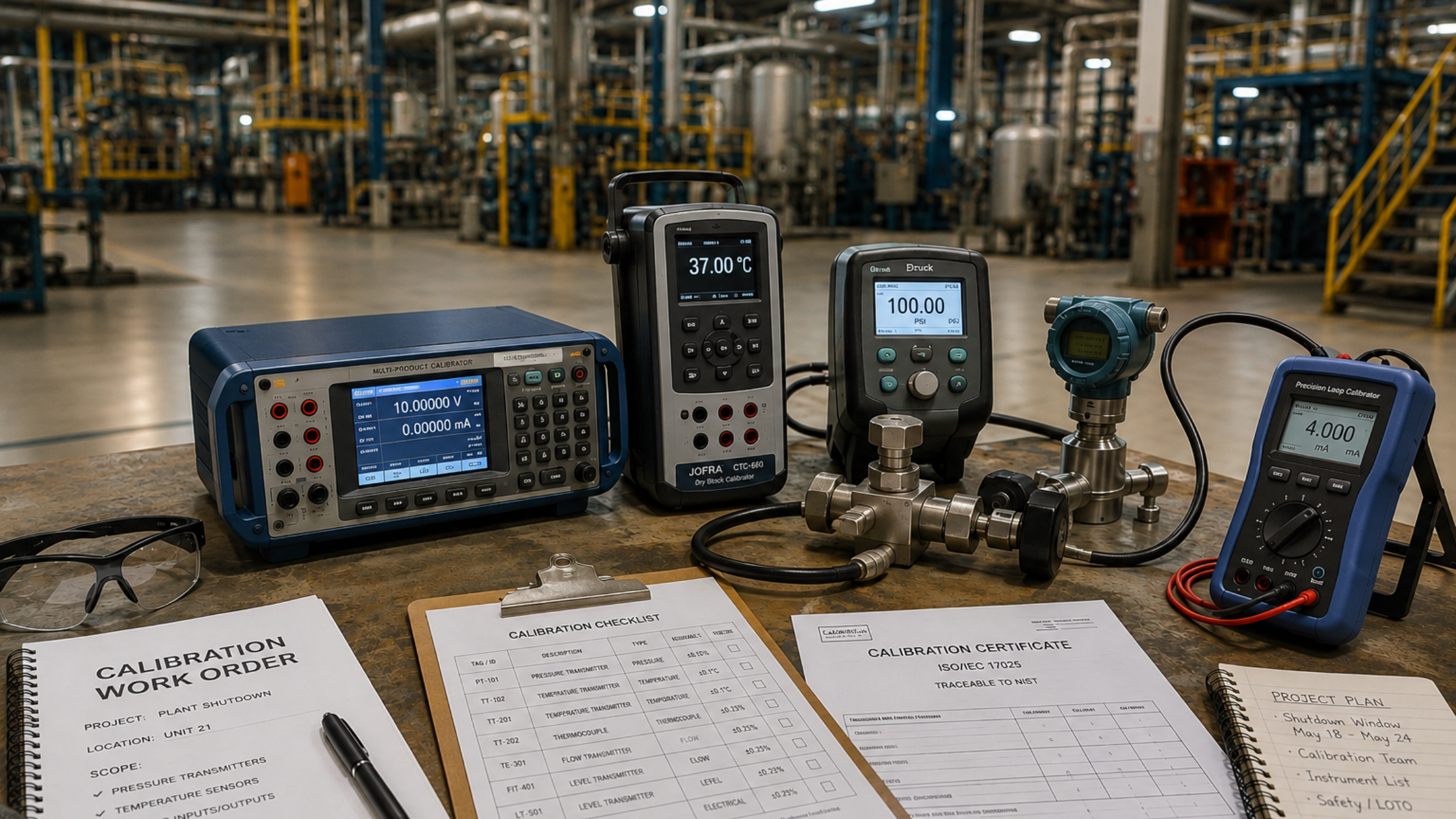
Calibration equipment rental is the short-term leasing of instruments used to verify and adjust the accuracy of other test and measurement devices. Instead of purchasing a calibrator outright, a company rents it for the duration of a project — a plant shutdown, a startup and commissioning phase, an audit cycle, or a one-time verification job and then returns it once the work is done.
Common categories of rental calibration equipment include:
- Multi-product calibrators — source and measure voltage, current, resistance, and frequency to calibrate multimeters, clamp meters, and panel meters
- Pressure calibrators and calibration kits — verify pressure transmitters, gauges, and switches against a known reference standard
- Temperature calibration baths and dry-wells — calibrate thermocouples, RTDs, and other temperature sensors used in process manufacturing
- Documenting process calibrators — combine signal sourcing and measurement with built-in record-keeping for as-found/as-left verification
- Loop calibrators — test and troubleshoot 4-20 mA instrumentation loops in the field
Each of these instruments needs its own current calibration certificate, traceable to a recognized national standard, in order for the readings it produces to be defensible in an audit.
Why Companies Choose to Rent Instead of Buy
1. Lower Capital Outlay
A high-accuracy multi-product calibrator or temperature bath can represent a significant capital expense, especially for equipment that might only see heavy use a few weeks a year. Renting converts that expense into an operating cost tied directly to the project that needs it.
2. Access to the Right Tool for the Job
Different projects call for different accuracy classes and ranges. A facility doing routine pressure transmitter checks has very different needs than one calibrating sanitary RTDs in a pharmaceutical bioreactor. Rental fleets typically carry a broad mix of models, so teams can match the instrument to the specific workload rather than stretching a single owned unit across applications it wasn’t built for.
3. No Calibration Maintenance Burden
Owned calibrators need to be recalibrated on a recurring schedule, stored properly, and repaired when something drifts out of tolerance. A reputable rental provider handles all of that before the unit ever leaves the warehouse, so the equipment arrives ready to use with current certification in hand.
4. Flexibility for Variable Workloads
Plant shutdowns, energy studies, and commissioning projects are often short, intense, and unpredictable in timing. Rental fleets let teams scale up quickly for a two-week outage and scale back down once it’s complete, instead of carrying idle inventory the rest of the year.
5. Try Before You Buy
Renting also gives engineering teams a low-risk way to evaluate a specific calibrator model before committing to a purchase, confirming it fits the application before capital is spent.
What to Look for in a Rental Provider
Not all rental fleets are equal. Before booking equipment, it’s worth confirming the following:
- Traceable, current calibration certificates. Every unit should ship with documentation tracing its accuracy back to a national metrology institute (such as NIST). Without this, the calibration you perform isn’t defensible.
- Equipment condition and protection features. Look for instruments with internal and external protection circuits, since field use carries real risk of operator error or accidental drops.
- Breadth of inventory. A provider stocking multi-product calibrators, pressure standards, and temperature baths under one roof simplifies logistics on multi-discipline projects.
- Turnaround and regional support. For time-sensitive troubleshooting, proximity matters — a provider with multiple regional warehouses gets equipment on-site faster.
- Software compatibility. If your workflow uses calibration management software for as-found/as-left documentation, confirm the rental unit is compatible before the project starts.
Matching the Instrument to the Application
A quick way to think through equipment selection:
| Application | Typical Rental Instrument |
| Calibrating handheld/bench multimeters, clamp meters, panel meters | Multi-product electrical calibrator |
| Verifying pressure transmitters, gauges, switches | Pressure calibration kit or pressure module calibrator |
| Calibrating thermocouples, RTDs, sanitary temperature sensors | Portable temperature calibration bath or dry-well |
| Field troubleshooting of 4-20 mA loops | Loop/process calibrator |
| Calibrating oscilloscopes | Multi-product calibrator with oscilloscope calibration option |
For sanitary or clean-process environments such as pharmaceutical bioreactors, food processing, autoclave sterilization, look specifically for baths designed for easy sanitization and tri-clamp sensor compatibility, since standard lab baths aren’t built for that environment.
A Practical Rental Workflow
- Define the scope. Identify which instruments need calibration, the accuracy class required, and the project duration.
- Confirm certification requirements. Check whether your industry or contracts require ISO/IEC 17025 traceable documentation.
- Reserve early for peak periods. Shutdowns and seasonal maintenance windows create high demand across multiple companies — book ahead where possible.
- Inspect on arrival. Check the unit, cables, and accessories against the packing list, and confirm the calibration certificate date.
- Return promptly and report issues. This keeps the fleet ready for the next customer and avoids unnecessary fees.
Final Thoughts
Calibration equipment rental gives engineering and maintenance teams a practical middle ground between underinvesting in test equipment and overcommitting capital to instruments that sit idle most of the year.
The key is working with a provider that maintains a well-documented, well-maintained fleet and can match the right calibrator — electrical, pressure, or temperature to your specific application.
If you’re planning an upcoming shutdown, commissioning project, or routine calibration cycle, Lakeland Engineering Equipment Co. offers calibration and test equipment rentals out of its Minneapolis and Denver locations, supporting projects across the Midwest and Mountain regions with fast turnaround and equipment matched to your application.
Browse the rental inventory or contact the team to find the right instrument for your next project.
Related Posts

Lakeland Engineering Names Ken Chamberlain President